The Ampersand
Twenty years ago a parent told their kid not to major in art. Ten years ago they said it about English. Five years ago the script tightened to anything that didn't end in -ology or -engineering. STEM was the moat. STEM was the parachute. STEM was the answer to every dinner-table question your kid was too polite to ask out loud.
You know how this ends.
I've been watching it end in slow motion for eighteen months. The CS grads I talk to are anxious in a way the comp lit grads aren't. Not because the comp lit grads have it figured out. They don't. Nobody does. But they were never promised the floor wouldn't move. The CS grads were told it was bedrock. Then somebody started writing code at the speed of thought, and the bedrock turned out to be a Jenga tower with a six-week release cycle.
The irony is thick enough to spread on toast. We trained a generation to speak the language of machines. The machines turned around and learned the language of people. If a screenwriter pitched that arc, the room would tell them to dial it back.
I want to tell you a story about a company I ran, because I think it explains what's actually happening, and what's coming for the people who were paying attention.
In 2014 I brought a Canadian agency called Robots & Pencils down to the States. I was CEO of the US operation. We grew thirty-four hundred percent in eighteen months, finished the year as the 35th fastest-growing tech company in the country, and most of the press I gave at the time was about the numbers. The numbers weren't the story. The name was.
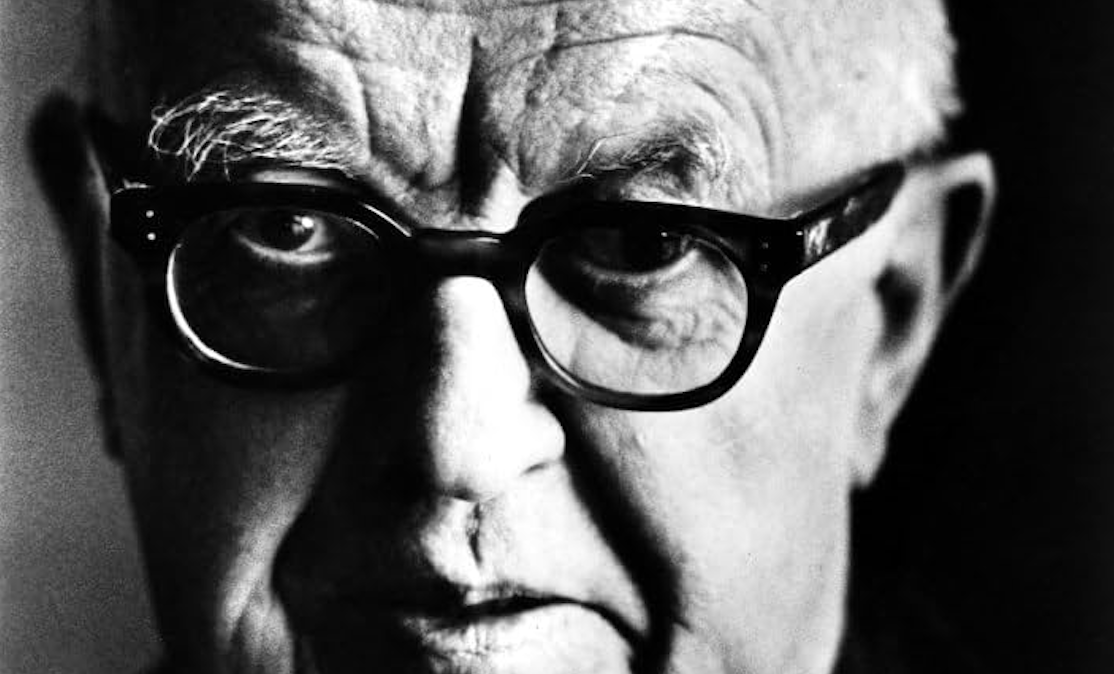
Robots & Pencils. The name was lifted, more or less, from C.P. Snow's 1959 lecture on the Two Cultures. Snow's argument that the sciences and the humanities had drifted into separate languages that could no longer talk to each other, and that the gap between them was the central problem of modern life. He wrote it about Cambridge dining halls. We built it as an agency.
The robots were the developers. People who could build the thing. The pencils were the designers. People who could see the thing before it existed. Two trades, two trainings, two languages, two halves of any product worth shipping. We had robots. We had pencils. We were good at both.
And the founder, who was (ironically, beautifully, to his own ongoing amusement) robot #1, was the most insistent voice in the building that good products are always visioned pencils first. You can't bolt art on at the end. Try it and the seams show forever. The most technical man in the room kept telling the room to start with the drawing.
He didn't found the company alone. His wife was the pencil to his robot, a brilliant artist, an interior designer with the eye that finds the wrong wall and tells you why, an accountant sharp enough to serve as the company's CFO. He was the technical man with a love of art he couldn't fake. She was the artist with the operational backbone most companies wish they could hire. Each of them stretched toward the center. Each of them was already half ampersand before the company had a name.
That's why it worked. The two people at the top of the org chart were the bridge they were asking the rest of us to build. You felt it the second you walked in. It pulled in robots who suspected they were also a little bit pencil, pencils who knew they were also a little bit robot, and the people who'd never picked a side at all. The brand wasn't a logo. The brand was the marriage.
But the ampersand was the entire reason the company existed.
You know who I mean. The dev who notices the kerning. The designer who reads the API docs because she actually wants to know what's possible. The one who drops #picky into a Slack design review without apologizing for it, because they know the small thing is the whole thing. The person who can sit between two rooms that don't speak each other's language and translate. Not the words. The intent. They were rare. We'd interview a hundred people and find one. They commanded a premium because the value of a translator scales with the distance between the parties, and the distance between an engineer and a designer in most companies is bigger than the distance between Calgary and the moon.
The ampersand people weren't better at either trade. They were the only ones in the room who saw both trades as the same problem from different chairs. They were almost mythological. We named the company after them.
Here is what I didn't see coming, even though I should have. AI doesn't pick a side. It never had to. It doesn't just close the gap between the dev and the designer. It closes the gap inside the bridge person, the small and humiliating gap between what they could always see and what they could actually produce. The designer who knew exactly how the API should work but couldn't write the call. She can write the call now. The dev who saw the right pixel grid but couldn't move pixels. He can move pixels now. The ampersand always saw both ends of the bridge. Now they can walk it. If Jobs called the computer a bicycle for the mind, AI just strapped rocket engines to the sides.
You want proof? A 23-year-old amateur mathematician named Liam Price, no PhD, no faculty appointment, no research lab, used ChatGPT to solve an open problem that had been sitting on the shelf for sixty years. Erdős Problem #1196, from primitive set theory. Sixty years. The kind of problem that gets named after the person who posed it because nobody alive could finish it. Price finished it. And then Terence Tao, the Fields Medalist, the person most mathematicians would rank as the best living mind in the discipline, verified the proof and co-authored the resulting paper. A 23-year-old with curiosity and a chatbot sat down at the same table as the greatest mathematician of his generation. Not because AI solved the problem for him. Because AI let him hold the conversation long enough to solve it himself. That's the ampersand. That's curiosity with tooling that doesn't punish you for not having the right letters after your name.
The bridge people are about to multiply. Not because the trait gets more common. That takes generations, and curiosity in two directions has never been on any roadmap I've ever seen. But the trait finally has tooling that doesn't punish it for refusing to specialize. For thirty years we paid the ampersand person less because they weren't "really" a developer or "really" a designer. We tolerated them because they made the meetings work. They are about to inherit the building.
And the lesson runs wider than design and code, because the ampersand was never really about design and code. The ampersand is about being curious in two directions at once. It's about being the kind of person who refuses to pick a side because they can't stand to leave the other side ignorant. That's not a job description. That's a humanities education.
Read carefully. Argue clearly. Hold a contradiction without flinching. Care about the answer even when nobody's grading you. Do the hard thing quietly. Take care of the person next to you before you take care of yourself. Carry two trades at once and a third in reserve. Say what you mean and mean what you say. It doesn't sound like much. It also doesn't fit in a job code, which is why we've been quietly defunding it for forty years. It didn't return on a single-year horizon, and the only people who tried to defend it sounded like they were defending themselves.
I'll tell you where I learned all of it, because it wasn't school. It was my parents and the people they surrounded us with. A father who came up through the Green Berets and ran a house on the principle that you say what you mean and you mean what you say. A mother and a community who treated curiosity as a chore you didn't get to skip. Nobody handed me a syllabus on holding a contradiction. I watched the adults around me do it at the dinner table. I graduated into the internet in 1985 and was running an ISP a decade later. That sharpened the tools. The tools came from home.
That's the part the system can't replicate and won't admit. The ampersand is mostly raised, not taught. The people who saw this moment coming were mostly the ones we wouldn't fund. And the ones who can step into it now were mostly raised by people who didn't need a funding line to know it mattered.
Framework knowledge has a half-life of about two and a half years. That's IBM's number for specialist technical skills, and it tracks with what the National Academy of Engineering has been saying for twenty years. By contrast, the half-life of a humanities education runs closer to twenty-five. The argument structure Aristotle taught is still the argument structure that wins. The people who can build and fix the machine will be needed for as long as there's a machine. The play isn't picking a side. It's picking one discipline that ages well and one that compounds fast, and refusing to let either atrophy.
Walk into a room where the pencils and the robots are really cooking and you can feel it through the floor. The designers sketch faster than the engineers can build. The engineers build faster than the designers can sketch. The ampersand is at the whiteboard turning the sketch into a system and the system into a sketch, and everybody in the room is operating one cognitive notch above where they could operate alone. That hum used to be the rarest sound in tech. We're about to hear it everywhere. In classrooms, in clinics, in non-profits, in offices that have been quietly dying for a decade because the bridge person never showed up.
Don't mistake this for triumphalism. The reversal doesn't make the humanities grad rich and the CS grad poor. It rearranges who has leverage, which is a different and harder problem. The CS grads who pair their craft with the human stuff, curiosity in two directions, care for the person on the other side of the screen, are going to be fine. The humanities grads who learned to type sentences but never learned to sit with a real problem until it broke? They're going to wash out the same as anyone. The credential never saved anybody. The skill underneath the credential is the only thing that matters now.
What's coming is a world where you need both hands. The robot hand and the pencil hand. The technical and the human. The thing the machine can amplify and the thing the machine cannot replace. People who learned only one are about to find themselves doing half a job. People who learned both, the ampersands, the bridge people, the curious-in-two-directions people, are about to find the assignment finally suits them.
I'll say something with an edge, because I have watched too many parents push too many kids in the wrong direction and I am out of polite ways to put it. Stop telling your daughter to pick something "practical." There is nothing practical about training her for a job description that will be rewritten before she graduates. Tell her to chase the thing she is actually curious about, and tell her to learn the tools that scale curiosity. That is the practical answer in 2026. Everything else is nostalgia for a stability that was always a marketing slogan.
And tell her to find the room. Find a university, a community, a circle that's already wired for curiosity in two directions. Humanities and sciences sitting at the same table, AI amplifying both, and credentials that still translate into workforce currency on the other side. Skills, capabilities, and a degree. Not one or the other. Humble plug, because it would be dishonest not to say it: that's exactly what we're building at Maryville. An achievement architecture for all of them. Robots, ampersands, and pencils. AI amplifying each one's curiosity and capabilities. We're about to show, not tell, what that means. Stay tuned.
The ampersand was always the symbol of the company because it was the symbol of the work. Two trades, one person, one connector character holding the whole sentence together. It was never decoration. It was the structure.
The robots are getting better. The pencils are getting better. But the people who can hold both, who can be technical without losing their humanity, who can be human without abandoning the craft, those people are about to inherit the moment. The ones we underpaid for thirty years because we couldn't fit them in a column.
Strive to be a little ampersand. Not just the robot. Not just the pencil. The character in the middle that connects them.
That's the job now. And it's the abstract of every job that comes after it.
Ready to be the ampersand? Let's talk or join the conversation in Discord.